
Even if temperatures aren’t hitting record lows this weekend, January in Maine still means serious indoor time – for both of you. When the sun sets before you’ve finished your afternoon coffee and going outside feels like a negotiation, your cat’s world shrinks to the same four walls, day after day.
That’s not great for either of you.
The good news: a few strategic changes to their indoor setup can make a real difference in how they (and you) get through the next two months of early darkness.
Give Them a Window With a View
Window time becomes premium real estate in winter. It’s the difference between staring at the same couch all day and watching actual movement, weather, birds, passing cars. Even a quiet residential street offers more stimulation than another hour looking at your living room.
Move a cat tree or sturdy perch to your best window, ideally one that gets morning or afternoon sun. If you’re feeling ambitious, set up a bird feeder outside the window – it’s basically installing premium cable for your cat. 
The goal is to create a reason for them to move from spot to spot throughout the day rather than spending eight straight hours in the same position on your bed. South-facing windows get the most winter sun, which matters when daylight is scarce and warmth is a commodity. Even if the view isn’t exciting, the changing light and weather patterns give them something to track.
Schedule Strategic Play Sessions
If your cat’s doing zoomies at 2am after sleeping for 16 hours straight, they’re not possessed – they’re bored and their internal clock is backwards.
Cats are crepuscular, meaning they’re naturally active at dawn and dusk. But indoor-only cats often flip to nocturnal when there’s nothing to do during daylight hours. The fix: two solid 5-minute play sessions timed strategically. One mid-morning or early afternoon, one right before your dinner.
Use a wand toy to get them jumping and chasing, or a kicker toy for that wrestling action. The intensity matters more than the duration – you want them actually running and leaping, not half-heartedly batting at a toy while lying down.
Rotate toys weekly. What disappeared into the basket last Tuesday becomes brand new again this Tuesday. Their brains reset and suddenly the mouse they ignored for three weeks is fascinating again. This isn’t about entertaining them constantly – it’s about burning energy at specific times so their natural sleep rhythm aligns with yours.
Add Food Puzzles to Their Routine
Food puzzles turn mealtime from a 30-second inhale into an activity that actually engages their brain.
Cats are natural hunters. In the wild they’d spend hours stalking, capturing, and eating small prey throughout the day. A bowl of kibble that appears twice daily doesn’t satisfy that instinct, which is part of why indoor cats get bored and destructive.
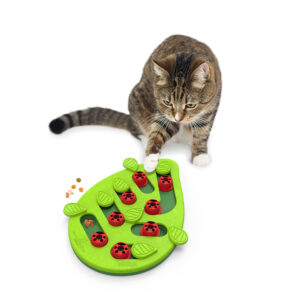 Start simple: a basic puzzle feeder with large openings that makes them fish kibble out with their paws. If your cat takes to it, you can graduate to more complex puzzles that require problem-solving. Even a slow feeder bowl (the kind with ridges and obstacles) adds five minutes of mental work to their routine.
For wet food eaters, try a lick mat – it spreads their meal out over time and gives them something to focus on. The point isn’t to make eating difficult or stressful. It’s to add a low-level challenge that mimics natural foraging behavior and breaks up the monotony of winter days that all look identical.
Start Indoor Harness Training Now
If your cat stares longingly out the window, January’s actually the perfect time to start harness training – indoors. This isn’t a quick process. It takes weeks of gradual desensitization before you’re ready for outdoor walks, which makes winter’s long indoor stretch ideal. Winter’s the ideal time to start this indoor enrichment project.
Start by leaving the harness near their food bowl so they get used to seeing it. Progress to putting it on for a few seconds with treats, then longer periods. Then add the leash and let them drag it around the house.
Practice walking on the leash indoors with no tension – this is critical before you ever step outside. By the time spring arrives and the outdoors becomes appealing again, you’ll both be ready. 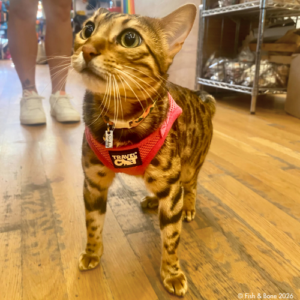
The goal isn’t to turn your cat into a dog. Most cats prefer to explore at their own pace rather than walk alongside you. But a well-trained cat on a harness gives them safe access to new sights, sounds, and smells when cabin fever sets in for both of you.
Teach One Simple Trick
Mental work tires cats out just like physical play does, and trick training is one of the most underused tools for winter boredom. Pick one achievable trick – “sit” is the easiest starting point – and spend 5 minutes a day on it.
Hold a super-exciting treat slightly above their head and move it back toward their ears. When they sit to follow it, give them the treat immediately and say “sit.” That’s it.
Repeat daily and keep sessions short – cats lose interest fast. Within a couple weeks most cats make the connection between the word and the action. The process matters more than the end result. Those few minutes of focused interaction break up the monotony of their day and give them something to think about beyond the couch cushions.
Plus, once they’ve learned “sit,” you can use it practically: before meals, before putting on their harness, or anytime you need them to pause and focus on you instead of launching into their 2am chaos routine.
Winter’s not optional, but how you both get through it is. These winter enrichment strategies won’t make the season shorter, but they’ll make it considerably less mind-numbing – for both of you.