
Spring Shedding Season: Why Your Dog Is Suddenly Leaving Fur Everywhere (And What Actually Helps)
If you’ve noticed an alarming increase in dog hair tumbleweeds rolling across your floors lately, you’re not imagining things. Welcome to spring shedding season — that magical time of year when your dog transforms every black sweater you own into a fur-covered disaster and your vacuum cleaner starts working overtime.
But here’s the thing: all that shedding isn’t random. Your dog’s body is doing exactly what it’s designed to do as the seasons shift. Understanding why it happens — and what actually works to manage it — can save you a lot of frustration (and maybe your furniture).
Why Spring Shedding Happens: The Science Your Dog Didn’t Tell You About
Your dog isn’t shedding to spite you, even though it might feel that way when you’re lint-rolling your work pants for the third time this morning. Shedding is triggered primarily by changes in daylight hours rather than temperature alone, which is why even indoor dogs who don’t experience dramatic temperature shifts still shed heavily in the spring.
As days get longer, your dog’s body adjusts hormone levels that influence hair growth and shedding cycles — essentially swapping out their thick winter coat for something lighter and more appropriate for warmer weather. It’s climate control, canine-style.
Not all dogs shed equally, though. Dogs with double coats — like Labrador Retrievers, German Shepherds, and Huskies — go through a much more intense shedding cycle than dogs with single-layer coats. If you’ve got a Lab, you know what we’re talking about. That soft, fluffy undercoat comes out in clumps during peak shedding season, usually from late March through mid-April. If you’ve got a Greyhound or a similar single-coated breed, you’re getting off easier with just a fine dusting of hair.
Age, health, and nutrition also play a role. Puppies and seniors may shed differently than adult dogs, and dogs with skin conditions or nutritional deficiencies might experience hair loss that goes beyond normal seasonal shedding.
How to Tell If It’s Normal Shedding or Something Else
Here’s the important distinction: normal spring shedding involves a general thinning of the coat and an increase in loose hair, but it shouldn’t involve redness, inflammation, bald patches, or open sores. If your dog is losing fur in patches, scratching excessively, or developing areas of irritated skin, that’s a sign to talk to your vet. Those symptoms could point to allergies, parasites, infections, or other medical issues that need attention.
Healthy seasonal shedding, on the other hand, results in a lighter coat that keeps your dog comfortable as temperatures rise. In fact, some dogs even seem more energetic and playful once they’ve shed their heavy winter coats. The process might not be enjoyable for the humans dealing with fur everywhere, but it’s a positive sign that your dog’s body is adjusting properly to the season.
What Actually Works: Managing the Fur Explosion
Okay, so your dog is shedding normally and you just need strategies to keep your home from turning into a fur-lined cave. Here’s what helps.
1. Brush More (A Lot More)
Daily grooming during peak shedding weeks can significantly reduce the amount of hair floating around your home. Brushing removes loose hair before it ends up on your couch, and it also stimulates the skin and distributes natural oils throughout the coat, which helps maintain a healthy shine. 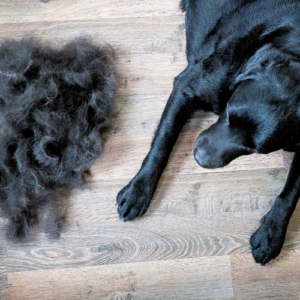
The tool you use matters. Dogs with double coats benefit from deshedding rakes and slicker brushes that can reach the undercoat, while short-haired dogs do better with bristle or rubber brushes. At The Fish & Bone, we carry tools like the JW Pet Grip Soft Deshedding Tool — ergonomic, effective, and designed to make the job easier on your hands during those daily brushing sessions.
Brushing isn’t just about managing fur, either. It gives you an opportunity to bond with your dog, check their skin for signs of irritation or pests, and keep track of how their coat is changing. Once your dog gets used to the routine, it can actually be a relaxing experience for both of you.
2. Feed the Coat From the Inside Out
Here’s something most people don’t think about: up to 35% of a dog’s daily protein intake is used to maintain skin and coat. If your dog’s diet is lacking key nutrients, it can show up as excessive shedding, brittle fur, or dry, flaky skin.
Omega-3 fatty acids — particularly EPA and DHA — help reduce itchiness and improve skin health, leading to a shinier coat and fewer issues with shedding, dandruff, and discomfort. Think of omega-3s as the long-game solution: brushing manages the symptom, but omega-3s improve the coat from the inside out.
Fish oil supports your dog’s heart health, promotes a silky coat, reduces itchy and flaky skin, and can help relieve allergies and joint pain. And because dogs can’t produce omega-3 fatty acids on their own, supplementation is often the most effective way to ensure they’re getting enough.
At The Fish & Bone, we recommend starting with Grizzly Salmon Oil Plus — it’s easy to add to your dog’s food, has a pump for mess-free dispensing, and the “Plus” formulation includes added vitamins for extra coat support. For advanced complete support, Austin’s Everything Oil is an excellent option. It delivers healthy fats in just the right ratios to support overall health. Made from sustainably caught wild sardine, anchovy, and mackerel, with organic hemp seed oil, this Omega 3/6/9 blend helps keep your pet’s skin radiant and their coat as lustrous as the day they first captured your heart.
The best part? These supplements are subscribe-able, so you never run out mid-shedding season.
3. Bathe Strategically
A warm bath can help loosen and remove dead fur, making shedding more manageable. Use a deshedding shampoo and conditioner that hydrates the skin and helps release dead hair. However, too many baths can dry out your dog’s skin, causing irritation and potentially more shedding, so aim for every 3–4 weeks unless your vet recommends otherwise.
We carry Skout’s Honor Probiotic Shampoo + Conditioner in both Honeysuckle and Dog of the Woods scents — the probiotic formula supports healthy skin and the 2-in-1 format makes bath time faster. Pair it with Skout’s Honor Probiotic Detangler for dogs with longer coats that mat easily during shedding season.
4. Protect Your Furniture (And Your Sanity)
Let’s be realistic: even with daily brushing and good nutrition, there’s still going to be fur. A lot of fur. Washable pet blankets for furniture or car seats aren’t just an accessory — they’re a containment strategy.
The Tall Tails blankets we carry are machine-washable, durable, and they photograph well if you’re the type who likes your dog’s Instagram to look good. Throw one on the couch, toss it in the wash when it’s covered in fur, repeat. It’s a small investment that saves your actual furniture.
5. Stay Hydrated
This one’s simple but often overlooked: dry skin leads to more shedding, so make sure your dog drinks plenty of fresh water throughout the day. As the weather warms up, keeping your dog hydrated supports overall coat condition and comfort.
The Bottom Line
Spring shedding is intense, but it’s also normal and healthy. Your dog’s coat is doing exactly what it should be doing — adapting to the season and keeping them comfortable. With the right tools, nutrition, and a little strategic planning, you can manage the fur without losing your mind.
And if you’re standing in your living room right now, watching another fur tumble weed drift past while your dog looks at you with complete innocence? We see you. We’ve been there. Come visit us at The Fish & Bone — we’ve got the tools, supplements, and moral support to get you through shedding season in one piece.
Shop our Shedding Season Survival Collection for all the essentials — from deshedding tools to omega-3 supplements to washable blankets. And if you’re ready to make fish oil part of your dog’s daily routine, sign up for a subscription and never run out mid-shed.